
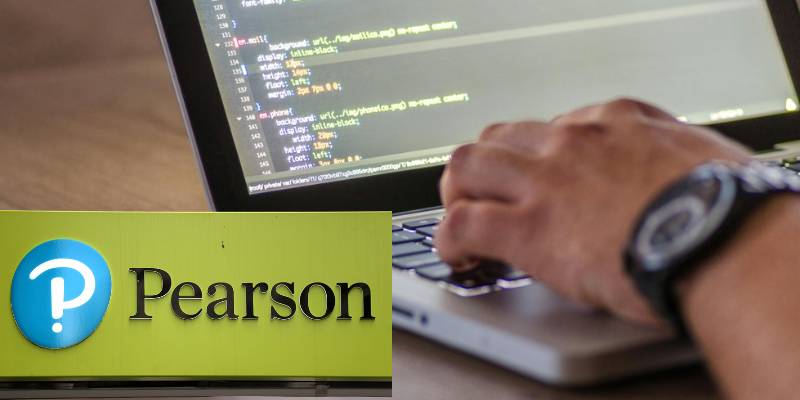
When Pearson released its latest earnings, the 6 percent profit jump wasn’t the only headline that grabbed the attention of the education and AI communities-the company also made the provocative assertion that education-specific AI outperforms other AI chatbots and models that students find online. The news has EdTech abuzz this week, but it’s also generating a lot of discussion outside of education circles.
Top officials at the British education behemoth are trying to make a big point. “Pearson’s AI is designed by educators and held to high standards,” says CEO Omar Abbosh, “as opposed to AI in the wild.” Those standard generative AI tools that students could easily use to complete assignments, like those from Google, are a lure that will degrade cognitive abilities, such as memory and problem-solving, in the long run, warns Pearson. You won’t hear that elsewhere, where the impact of AI in education is depicted as neutral or even beneficial.
What I notice is that this discussion is a microcosm of the same debate happening at an academic level. The OECD’s recent 2026 Digital Education Outlook report warned that unmediated use of generative AI can facilitate an instrumental approach to learning that may result in a “mirage of false mastery.” The worry is that students will end up learning how to use AI instead of learning the subject matter.
While some of what Pearson is touting is supported by research-again, research not reported in its earnings report-students who use Pearson’s adaptive AI-powered products do tend to study more and better than students who use generative AI chatbots. That’s a story about studying hard and studying smart, and it appeals to teachers who have seen students rely too much on non-adaptive AI.
And here’s where it gets interesting. Shareholders aren’t popping the champagne. Even as the company’s profits rise, Pearson’s stock price has fallen this year amid investor concerns that large, free AI systems could displace textbooks and classes. If that’s what the market thinks, it’s a sign that investors haven’t made up their minds about whether AI will be a huge opportunity or a deep threat.
So what does this mean? Personally, I don’t think it is about one corporation trying to protect its territory-I think it is about culture. Is AI going to be used to improve learning or to circumvent it? There is no end in sight to this discussion, and the decision of Pearson highlights just how much tension there is at the intersection of technology and education.
So, let’s keep an eye on this issue-since the way we integrate AI in the classroom now will influence not just tomorrow’s test results, but how an entire generation approaches learning and problem-solving.