

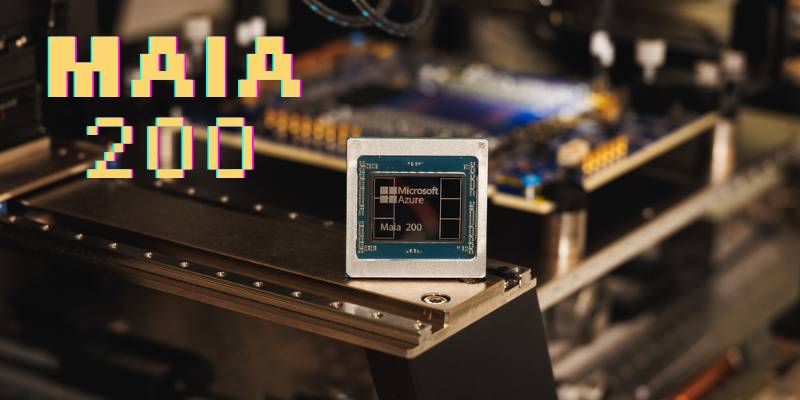
One thing is clear, according to Microsoft: it~apos;s uncomfortable with Nvidia having all the keys to the AI kingdom.
The company has started deploying its next-generation AI chip, Maia 200 – a custom accelerator designed to handle artificial intelligence workloads inside Microsoft’s own data centers.
And this isn’t some nebulous “someday in the future” announcement of the sort tech companies love to toss out there. Maia 200 is in the process of being deployed in an Iowa data center now, and another deployment is planned for Arizona.
That sort of speed makes the message ring that much louder: Microsoft wants to lean on Nvidia’s hardware less, and it wants to do so right now. One reason the moment is so interesting is that wagging on Microsoft’s chip isn’t, in this case, enough.
Plenty of companies have tried. The real drama is that Microsoft is going after Nvidia’s greatest strength, and it isn’t raw performance. It’s software dominance. CUDA (Compute Unified Device Architecture), Nvidia’s platform for general-purpose computing on its GPUs, is more or less the lingua franca for AI development today.
Developers don’t just purchase an Nvidia GPU, they architect entire AI systems around Nvidia’s tools, libraries and workflows. Wresting that sort of lock-in is famously hard.
Microsoft is betting that open ecosystems can erode that grip. And then, also in tandem with Maia 200, Microsoft is leaning into Triton, an open source programming language and compiler designed to make it possible to write high-performance AI code without needing to rely on CUDA.
There’s some added flavor here as well: Triton contains significant contributions from OpenAI, which undercuts some of the corporate guinea pig vibe and makes the whole push feel a bit more like an earnest effort to reshape how AI software is put together.
And, honestly, I doubt Microsoft thinks it can “replace Nvidia” right off the bat. That’s not realistic. Nvidia is still the gold standard in AI training and inference, and its chips continue to power the backbone of this boom.
But Microsoft needn’t win the entire race to alter the outcome. Even moving a significant share of inference workloads – such as those behind Copilot-like AI features – to Maia chips could save billions of dollars in the long run and reduce Microsoft’s reliance on one supplier.
It also alters the psychology of the market. The pricing power enjoyed by Nvidia is, in part, because cloud companies just don’t have many other options at the same level of scale. But once Microsoft demonstrates that it can run flagship workloads in production on its own silicon, the calculus for negotiations changes. Vendors that used to think they were untouchable are feeling, suddenly, negotiable.
Microsoft has also emphasized that Maia 200 has been optimized for energy-efficient inference, which is important since inference-that’s when an AI model reacts to users in real-time-is the time when cloud costs can go sproing.
It’s not just about speed. How much does it cost them per token, how much energy do they draw, how efficient is their memory, and can these models run without melting data centers into power-hungry monsters?”
Microsoft’s own announcement lays out those performance and efficiency targets in a big way, positioning Maia 200 as less of a whim than a serious production platform. And there’s the bigger plot twist: Microsoft is not the only one doing this. Google has TPUs. Amazon has Trainium and Inferentia.
Meta is experimenting too. So the “AI chip war” is no longer a one lane highway owned by Nvidia. It is shaping up to be a crowded street fight in which every major cloud company is trying to control its own destiny.
Nvidia sees this, obviously. It’s been muscling into this with more than just GPUs, but an entire ecosystem itself or AI infrastructure from investments and partnerships that are used to keep the demand for Nvidia platforms baked into the future of the industry.
One case that has been discussed is Nvidia’s deepening connection to AI infrastructure company CoreWeave” – the article serves as a reminder that the company is doubling down on supply chains and partnerships in order to feel at heart of all things AI.
Yet the Maia 200 rollout from Microsoft feels like a type of inflection point that in the future we’ll look back on. Not because it’s the end of Nvidia’s hegemony – far from it – but because it marks the beginning of a more competitive age.
The era of cloud companies paying Nvidia to do everything under the sun might be coming to an end. We are transitioning into an era of cloud giants increasingly building their own chips, tools, and frankly, leverage.
And if you’re a reader (or a reporter) wondering “does this matter to normal people?” -yeah, it probably does. The price of AI, the pace of AI assistants and who owns the future of AI infrastructure will determine everything from business software to education to consumer gadgets.
Whether Maia 200 turns out to be a breakout success or just a strong internal workhorse, it is part of something much larger: Microsoft is no longer content to rent the AI future. It wants to own it.