

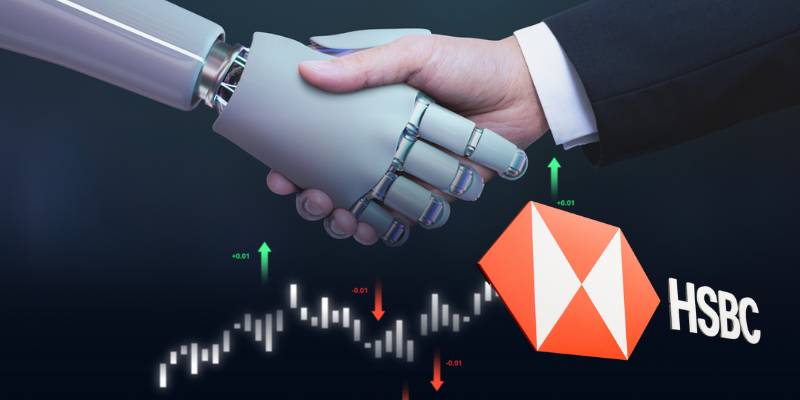
Banks have long been guided by spreadsheets and risk models. But with the announcement of a massive new deal on December 1, 2025, HSBC seems intent on turning that tune around – and exchanging some of those spreadsheets for generative-AI algorithms provided by Mistral AI.
The Parisian startup is now poised to power an AI transformation of the global bank.
Mistral’s commercial models will be put on HSBC’s tech stack under the multi-year deal, combining the bank’s in-house tech clout with Mistral’s AI expertise.
The hope, it suggests, is that in parsing dense financing documents and generating translations in multiple languages as well as risk assessments and even personalized client communications – the rollout promises to do away with grunt work and accelerate everything.
Credit teams, compliance officers, even client-service reps could soon have AI sidekicks to help them navigate through chaos that once took hours.
But here’s the best part: this is not only about saving time from potentially boring processes. It marks a far broader change in how banking – particularly at large institutions – is conducted.
Now, keep in mind that HSBC already employs machine learning to detect fraud, ensure compliance and monitor transactions.
The move is a full embrace of generative AI, placing the bank in line with its peers like JPMorgan Chase and Goldman Sachs who have also started to embed big-language models into their workflows.
So what could go wrong? Read the latest AI is potent – but messy. For one thing, large-language models are infamous for generating “hallucinations” - outputs that sound right but aren’t actually true.
In the world of banking, that could translate into poor translations, incorrect analyses or risky mis-assessments.
There’s also the data-privacy fence: pushing sensitive client data through A.I. pipelines becomes possible only with airtight governance.
To HSBC’s credit, however, officials there have stressed that such a rollout would follow their current audit framework for responsible AI.
Here’s where I start to get a little skeptical (in a good, curious, healthy way). On the other hand: savings! No more late-night data drudgeries, which leaves you a smooth sailing day of client service.
On the other: Are we potentially exchanging velocity for micro mistakes that - in finance – can have outsized results?
And what happens if a cheaper, quicker underwriting document slips through that has a material error in it? Or, worse, what happens if a translation discrepancy results in regulatory or legal risk?
It is that balance – between velocity and danger - that has made this deal such a watershed. If it succeeds, HSBC could redefine how traditional banks operate in the AI era.
If not … well, we might be in for a front-row view of the reasons some contend that A.I. in finance should come with guardrails tighter than Fort Knox’s.
I ultimately see this as the move of a decade. Institutions that adapt may forge ahead; those that lag could be left behind.
But. But! Building that future requires not only ambition but also humility, checks and balances, and maybe a little bit of healthy paranoia.