

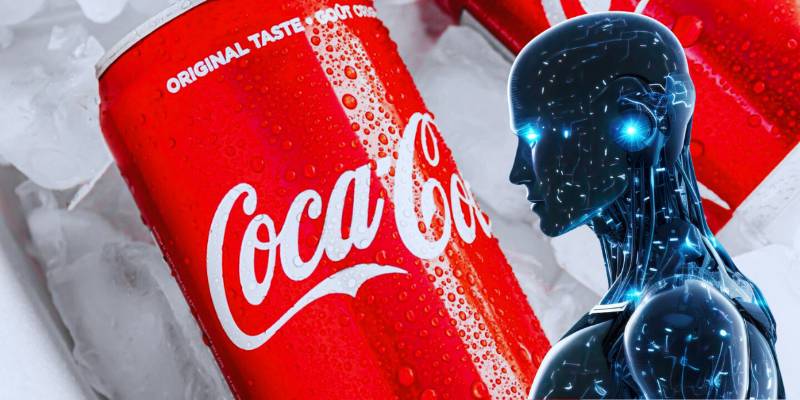
Coca-Cola’s recent decision to pull back from its price-increase strategy and instead use its marketing efforts to convince consumers to pay more for its products is a sign that the inflation-driven growth has run its course, and the company is now experimenting with AI-driven marketing tools to stay ahead of shifting consumer behavior. This push is the company’s effort to make sure its messaging is as relevant and timely as possible to consumers.
But in real-world terms, Coca-Cola is opening up AI technology – which already pervades the company’s data analytics, business planning and even bottling-line monitoring – to some of the brand’s most imaginative and unpredictable communications strategies. Its top marketers are experimenting with AI-inspired speechwriting, automated social media postings and even digitally driven midcampaign replanning, all activities typically thought to be the sole domain of humans. While it’s still a limited experiment, the intent is to cut the development time of content, advertising and marketing campaigns, and infuse them with more data.
But, here’s the kicker and this is where it gets interesting. It isn’t about automating processes to make them more efficient, but the management of Coca-Cola considers AI as a tool to boost demand and not only reduce costs. It is a different story. Rather than focusing on price as the only instrument to boost sales, as long as consumers can bear it, they consider AI as a tool to influence consumers’ purchasing decisions and find their messages.
Now, I know what you’re thinking. This isn’t the first time we’ve heard of this. In fact, you may recall that Microsoft announced that it would be working with Coca-Cola to transform various aspects of its business such as marketing, manufacturing, and even customer service using Azure and other Microsoft Cloud tools including Microsoft’s generative AI. This included working with Microsoft 365 Copilot and, in other areas of the business, automating processes, for instance.
But here’s the thing: is this a brand in pursuit of efficiency or is it a brand in pursuit of reinvention? Others look to Coca-Cola’s previous AI-generated Christmas ad campaigns to demonstrate the current mismatch between tech and marketing. In December, I read about how the brand’s new generative AI-powered festive ad elevated its visual storytelling but left some questioning if it delivered on the brand’s famous festive feels.
That leads to the bigger questions: is AI going to enable the world’s largest soft drinks company to talk to consumers in a relevant and engaging way, or is it just going to sound generic and lifeless? No one knows, although it is clear from the trials it has run that Coca-Cola is not ready to fire its entire marketing department just yet and is relying on some level of human input.
And yet this is more than a marketing campaign, which is why this is significant. It is part of a wave of AI moving to the front office as much as the back office, permeating all the way up to business strategy, and not just back-end data processing. When companies as large as Coca-Cola, Nike and Starbucks are turning to AI for sales, customer service and mass personalization, you know it’s no passing phase.
Whether that’s awesome or terrifying depends on who you ask. Either way, though, in a post-price-led growth world, AI-led persuasion is no longer just a scary buzzword, but rather an increasingly important part of big global brands’ strategies for winning consumers’ affection and spending in the future.