

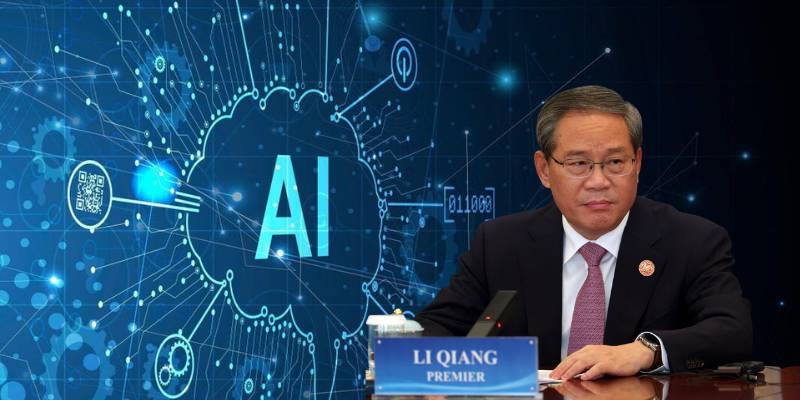
Chinese Premier Li Qiang urged “better coordinating energy supplies and computing resources” to achieve its AI goals. That’s more down-to-earth than China’s typical discussion of artificial intelligence, which tends to focus on the high-tech promise of the technology.
Yet it’s a reminder that AI isn’t just a product of fancy algorithms, but also a huge consumer of electricity. Data centers and server farms that host AI systems are energy-intensive, and training a large AI model can consume as much electricity as a small town.
Restrictions by the US on the export of advanced AI chips to China have prompted Beijing to focus on building its own chips, adding urgency to Li’s call. Despite that, the focus on the basics feels like a step in the right direction.
China has been talking about AI for years, and has included it in various national development plans. There are already a host of national AI plans, funding programs and regional innovation hubs across the country.
For more information on how China could achieve its AI ambitions, see this analysis. Still, some trade-offs are worth considering. Data centers and server farms consume a lot of electricity, and that has an environmental impact.
Overall data center electricity usage is projected to grow dramatically in coming years, shaping energy markets and dictating investment priorities, as this analysis explains. So the unspoken part of Li’s statement is whether China can achieve its AI goals while meeting its climate obligations. It won’t be easy.
There’s another factor: talent. While more server farms are important, they can’t produce the ideas that will drive AI forward. That will take researchers, engineers and a vibrant ecosystem that produces innovation.
China churns out an enormous number of STEM graduates every year, but the global AI research community is highly international. The competition is intense, and innovation knows no borders. Overall, Li’s emphasis on the practical aspects of AI development feels like a positive step.
No hype, no hyperbole. Just a need for more server farms and a reliable source of electricity, and a commitment to support the people who will make it all happen. Sometimes, progress isn’t sexy. Sometimes it’s just transformers and cooling systems. Industrial parks full of blinking lights.
Keeping the lights on so that servers can run through the night. The global AI race is often depicted as a battle of wits. But it’s also a battle of infrastructure. And for now at least, China doesn’t seem interested in losing that battle.